What is Matcha?
Matcha (抹茶) is finely ground Japanese green tea powder made from shade-grown tea leaves called tencha. Before harvest, the tea plants are covered for several weeks, forcing them to produce more chlorophyll and L-theanine, which creates matcha’s signature vivid green color and deep umami sweetness. When you drink matcha, you don’t steep and discard the leaves. You consume the whole leaf in powdered form, absorbing nearly everything the plant contains.
This is what makes matcha categorically different from every other type of green tea.
Matcha Grades Explained: Ceremonial vs. Culinary
Matcha is broadly divided into two categories based on leaf quality and intended use:
Ceremonial grade is the highest quality, made from the youngest leaves of the first harvest of the year. Color is the most vivid jade green, flavor is sweet and umami-forward with minimal bitterness, texture is ultrafine. This is the matcha intended for drinking straight: just hot water and a bamboo whisk, nothing else. It is the matcha of the Japanese tea ceremony, where the preparation itself is the practice.
Culinary grade is made from more mature leaves, with a stronger, slightly more bitter flavor and a less vivid green. Perfectly suited for matcha lattes, baking, cooking, and any preparation where other ingredients play a role. Many specialty cafes use high-quality culinary grade for their drinks: sensibly so, since milk or natural sweeteners are part of the formula.
Neither is objectively superior. What matters is matching the grade to the purpose.
How to Identify Quality Matcha
Most people buy matcha without knowing what to look for. Here are the signs you can evaluate immediately:
Color: Quality matcha is vivid jade green, not yellow, not olive, not brown. Color is the most immediate and reliable quality indicator. Yellowing or dull olive tones signal older leaves, poor storage, or oxidation.
Texture: Pinch a small amount between your fingers. Good matcha feels silky fine, almost like high-quality face powder. If it feels gritty or clumps into small balls, the grind is coarse and the quality lower.
Aroma: Open a fresh tin and inhale. Quality matcha smells of fresh cut grass, sometimes with a faint marine or seaweed undertone: clean, green, alive. No aroma, or a dry hay smell, indicates stale or improperly stored matcha.
Taste: Touch a small amount to the tip of your tongue. Good matcha registers a brief umami sweetness before a gentle bitterness follows. If it’s immediately and sharply bitter with no sweetness at all, the quality is low or the matcha is past its best.
How to Prepare Matcha at Home
Preparing matcha is not complicated, but a few steps make the difference between a smooth, flavorful cup and a bitter, clumpy one:
What you need:
- A matcha bowl (chawan) or any small ceramic bowl
- A bamboo whisk (chasen). This genuinely matters.
- A small fine-mesh sieve
Basic preparation:
- Sift the powder: Sift 1–2 teaspoons (about 2–3g) of matcha through the sieve into your bowl. This prevents clumping and helps the powder disperse evenly.
- Add water: Pour approximately 70–80ml of hot water, ideally 70–80°C, not boiling. Boiling water scalds matcha, turning it bitter and dulling the color.
- Whisk: Use the bamboo whisk in a brisk W or M motion for 15–20 seconds until the powder fully dissolves and a fine layer of foam appears on the surface.
- Drink immediately: Matcha is best consumed right after preparation, while the foam is fresh and the temperature is at its peak.
For a matcha latte, prepare a more concentrated shot (less water, same powder) then pour over steamed or cold milk to taste.
Health Benefits of Matcha
Matcha is not wellness marketing. The benefits are well-documented:
EGCG antioxidants: Matcha contains higher concentrations of epigallocatechin gallate (EGCG) than any other tea. EGCG is a potent antioxidant studied for its role in cardiovascular health, immune support, and cellular protection.
Caffeine and L-theanine, a unique pairing: A cup of matcha contains roughly 25–35mg of caffeine alongside L-theanine, an amino acid that promotes calm alertness without the jitteriness or heart-racing associated with coffee. The combination produces what many people describe as “clean energy”: focused, sustained, without the crash.
Mood support: L-theanine stimulates alpha wave activity in the brain, a state similar to meditation, reducing stress while maintaining mental clarity. It’s why the tea ceremony was always more than just tea.
Greater nutrient density than steeped tea: Because you consume the whole leaf rather than just the water it steeps in, the concentration of every nutrient (antioxidants, vitamins, amino acids) is significantly higher than regular green tea bags.
Matcha Drinks at Cafes: What to Order
Walking into a matcha cafe in Ho Chi Minh City, you’ll typically find:
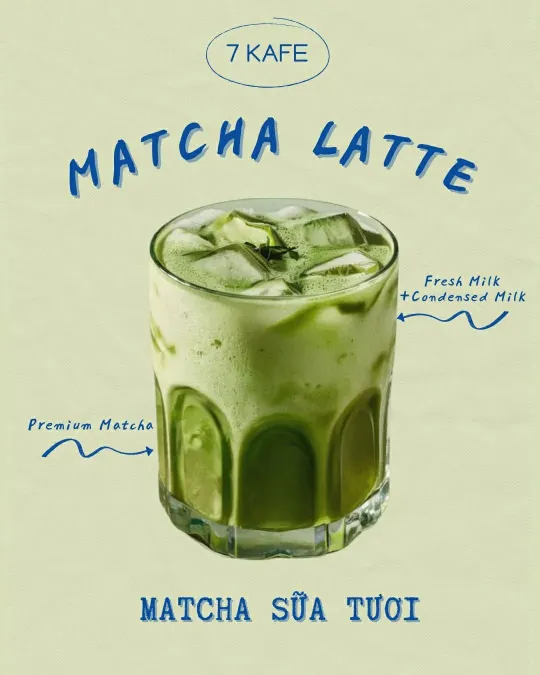
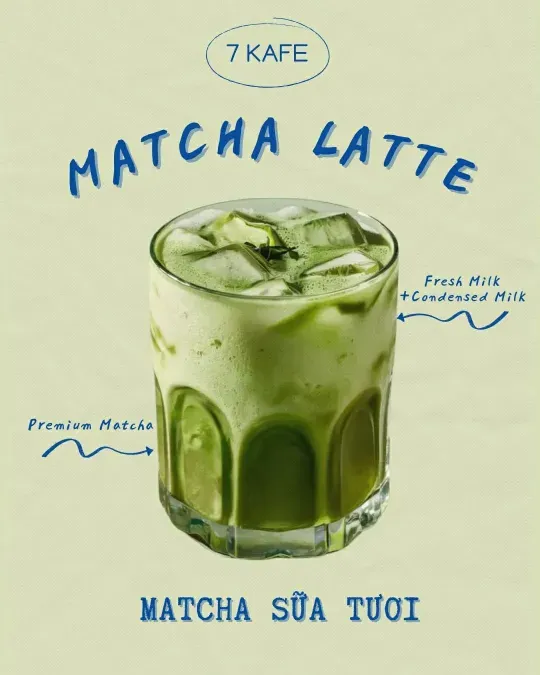
Matcha latte (hot or iced): The most approachable entry point. Concentrated matcha blended with steamed or cold milk. The milk softens the bitterness while letting the tea character come through. If it’s your first time, start here.
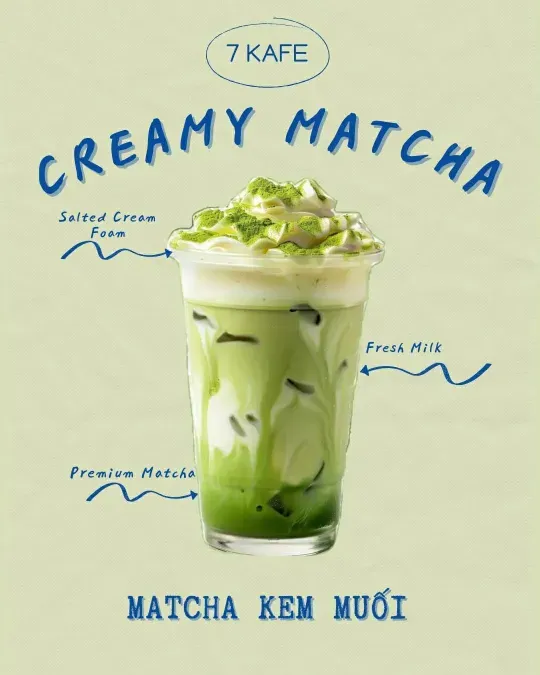
Creamy matcha: Matcha topped with a layer of fresh cream or cold foam. The contrast between the intense green tea below and the rich cream above creates a layered experience that shifts with every sip: slightly bitter, then creamy, then sweet.
Traditional whisked matcha: For those who want to understand what matcha actually is. Just powder and hot water, nothing else. Pure umami, gentle bitterness, and the cleanest expression of the tea’s character. Requires no additions if the matcha is good.
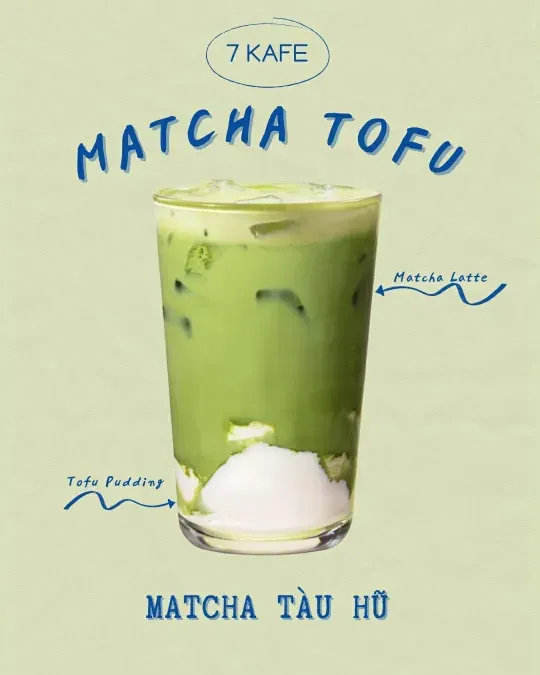
At 7 Kafe in Binh Thanh, the matcha menu is designed for all levels: from first-timers finding their footing to matcha regulars who know exactly what they want. Each drink is prepared with care, served in a space where the philosophy is simple: some moments deserve to last longer than they usually do.
People Also Ask
When is the best time to drink matcha?
Morning through early afternoon is ideal. Matcha contains caffeine, so drinking it after 3–4pm may interfere with sleep for sensitive individuals. Drinking it 30 minutes after a meal aids absorption and avoids the mild stomach sensitivity some people experience on an empty stomach.
Can you drink matcha every day?
Yes. Many people in Japan and health-conscious communities around the world drink 1–2 cups daily. That said, matcha contains caffeine and meaningful levels of vitamin K, so those on blood-thinning medication should consult a doctor. Pregnant women should limit intake and seek medical guidance.
Does matcha latte need sugar?
Not necessarily. High-quality matcha has a natural umami sweetness. It shouldn’t taste sharply bitter when prepared correctly. If you’re new to matcha, a small amount of honey or a natural sweetener helps ease the transition. Many regular drinkers gradually reduce sweetener as they develop a taste for the tea itself.
How is matcha different from regular green tea?
Both come from the same plant, but the similarities end there. Matcha leaves are shade-grown before harvest, increasing chlorophyll and L-theanine. After harvest, they’re dried and stone-ground into a fine powder rather than rolled and steeped. When you drink matcha, you consume the entire leaf. When you drink regular green tea, you discard it. The result: matcha delivers several times the nutrient density, caffeine, and flavor intensity of a standard green tea bag.
What does matcha taste like?
Good matcha tastes like concentrated green: grassy, slightly marine, with a distinct umami sweetness and a gentle, clean bitterness at the finish. It’s an acquired taste for some, immediately loved by others. Matcha latte is the gentler introduction: the milk rounds the edges, leaving a drink that is verdant and smooth without being overwhelming.
Is matcha cafe saigon easy to find?
The matcha cafe scene in Ho Chi Minh City has grown significantly. You’ll find dedicated matcha cafes in districts 1, 3, and Binh Thanh, ranging from modern minimalist spaces to places like 7 Kafe that lean into a slower, more intentional approach to the drink. Quality varies widely; the color of the matcha in the cup is always the first thing to check.
Whether you’re trying matcha for the first time or refining a long-standing ritual, 7 Kafe at 180/79 Nguyen Huu Canh, Binh Thanh is a quiet place to do either. Come for the matcha. Stay for the stillness.