
What Makes a Saigon Cafe a “Hidden Gem”?
A hidden gem cafe in Saigon is one that rewards curiosity: tucked down an alley, unmarked from the street, or simply operating without the marketing budget that puts other places on every travel list. These are cafes where the regulars are locals, the prices haven’t been adjusted for tourists, and the atmosphere feels genuinely earned rather than designed. Saigon has dozens of them, and finding them is one of the city’s quieter pleasures.
This is not a list of every cafe in Ho Chi Minh City. It’s a neighborhood-by-neighborhood guide to the kinds of places that don’t show up on page one of Google, and why each part of the city has a different version of what “hidden gem” means.
Binh Thanh: Riverside Calm, Away from the Circuit
Binh Thanh’s hidden cafes occupy the space between its two personalities: the gleaming towers of Landmark 81 and the old residential lanes that still feel like the Saigon of thirty years ago. Walk away from Nguyen Huu Canh’s main artery and into the smaller alleyways, and the city’s pace visibly changes.
The lanes off Nguyen Huu Canh, particularly the numbered “hems” between the river and the residential blocks, carry a quality of stillness that most of Saigon’s central districts have lost. Cafes here tend to be small, family-run, and unadvertised. Some have been in the same location for a decade without ever needing a sign beyond the smell of coffee at 7 AM.
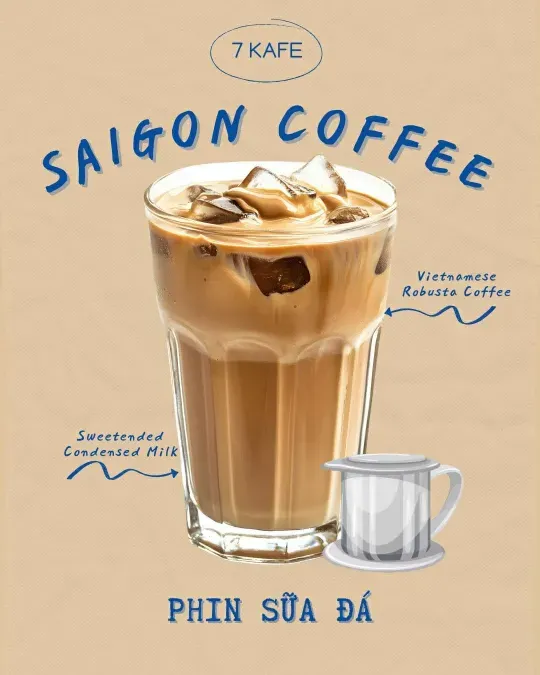
7 Kafe at 180/79 Nguyen Huu Canh is one of Binh Thanh’s quieter discoveries: a zen-philosophy cafe built around the idea that coffee and matcha deserve unhurried attention. There’s no rush here. The space uses warm wood, real plants, and natural light to create the kind of environment where time genuinely slows. The menu is kept short and made well: Vietnamese coffee alongside carefully prepared matcha drinks, served without ceremony or urgency. Open daily from 7:00 AM to 10:00 PM.
For visitors exploring Binh Thanh, this corner of Nguyen Huu Canh is an ideal starting point: close enough to Landmark 81 to find easily, far enough from the tourist circuit to feel like an actual discovery.
District 3: Literary Lanes and Old Saigon Character
District 3 is arguably Saigon’s most architecturally interesting district: French colonial buildings, tree-lined boulevards, and a cafe culture that’s been building quietly for decades. The hidden gems here are not hard to find if you know which streets to walk.
The area around Vo Thi Sau Street has a cluster of independent cafes that draw writers, architects, and students who want to think without being photographed doing it. These aren’t Instagram cafes. The furniture is mismatched. The walls have bookshelves. The music, if there is any, is low enough to have a conversation over.
Nguyen Dinh Chieu Street carries a similar energy: slightly more residential, with cafes tucked behind gate entrances that first-time visitors walk past without noticing. This is where you find the places that have been operating under the same name for fifteen years, serving the same three things the owner knows how to make perfectly.
District 3’s character is literary and unhurried, the kind of neighborhood that rewards slow walking and no particular agenda. If you have an afternoon free, this is where to spend it.

Phu Nhuan: Artsy, Independent, and Proudly Local
Phu Nhuan sits between Binh Thanh and the airport corridor, and most tourists drive straight through it on the way somewhere else. That’s their loss. Phu Nhuan has one of Saigon’s strongest concentrations of genuinely independent cafes, run by people who decided they’d rather open a space they believed in than replicate what was already working elsewhere.
Phan Xich Long Street is the district’s creative spine. The cafes here lean artistic: hand-lettered menus, walls hung with local photography, furniture that arrived from different decades. What they share is a refusal to be generic. Each one has a point of view.
Beyond Phan Xich Long, the residential lanes of Phu Nhuan hide smaller spots that don’t have enough seats to ever feel crowded. These are the places where the owner makes your coffee themselves, where the music playlist was put together with care, and where no two visits produce exactly the same atmosphere.
Phu Nhuan’s hidden gem cafes tend to be artsy cafe Ho Chi Minh discoveries for the creative crowd: designers, photographers, people who find the district by following recommendations rather than maps.
District 4: Gritty, Authentic, Untouristy
District 4 doesn’t get written about much in English-language Saigon guides. That is precisely what makes it interesting. Sitting just across the canal from District 1, it has a reputation as a local food and market district, which means the cafes that exist here were built for people who live nearby, not for visitors passing through.
The hidden cafes in District 4 tend to be older, rougher-around-the-edges, and entirely confident in what they are. Plastic stools are common. Air conditioning is not guaranteed. The coffee is often extraordinary: phin-filtered, dark, served with exactly the right amount of sweetened condensed milk or black with no apology.
Nguyen Tat Thanh Street, running along the riverbank, has a handful of spots that catch the morning light beautifully and serve some of the most honest Vietnamese iced coffee you’ll find in the city. The clientele is early risers, market workers, and motorbike taxi drivers: about as far from the tourist circuit as you can get while still being ten minutes from District 1.
District 4 is not for every visitor. But for anyone who’s exhausted by spaces designed to be photographed, it’s a genuine relief.
Thu Duc: Creative Clusters in the New City
Thu Duc, formally merged into the broader “Thu Duc City” administrative area, has become Saigon’s emerging creative district over the past few years. What started as an overflow zone for universities has developed a genuine cafe culture built around students, young designers, and artists priced out of District 3.
The hidden gem cafes in Thu Duc tend to be off the beaten path cafes Saigon for the creative generation: DIY interiors, experimental menus, spaces that double as galleries or event venues on weekends. They’re further from the city center, which means fewer casual visitors and a more committed, local crowd.
Vo Van Ngan Street and the area around the University of Technology and RMIT Vietnam campus have the highest density of independent spots. Many are open late, reflecting the student population’s hours. Coffee quality here is often excellent; the clientele is young, opinionated, and caffeinated enough to care about the difference.
Getting to Thu Duc requires intention, roughly 30-45 minutes from District 1 by Grab. But for anyone spending more than a week in Saigon, the trip reveals a version of the city that feels genuinely new.

How to Actually Find Hidden Cafes in Saigon
The tourist trail in Saigon is well-documented. The hidden cafes are not, by definition, but there are reliable ways to find them.
Walk perpendicular to the main roads. Saigon’s cafe culture lives in the hems, the numbered alleyways that branch off main streets. A cafe on a main road in District 1 is usually priced and styled for tourists. The same cafe, three turns into a hem, is usually priced and styled for neighbors.
Use Vietnamese-language searches. Google Maps reviews written in Vietnamese surface different places than English reviews do. Search “cà phê ngon” (good coffee) or “quán cà phê yên tĩnh” (quiet cafe) with a location filter, and you’ll find places that expat blogs haven’t covered yet.
Follow locals, not influencers. The most reliably hidden gem cafes in Saigon are the ones where locals eat. If the crowd is predominantly Vietnamese, the price and quality tend to be better. If every table has someone shooting content, you’ve already left hidden gem territory.
Go early or go late. The best hidden cafes in Saigon are at their most atmospheric outside peak tourist hours: early morning (before 9 AM) or late afternoon (after 4 PM), when the light is right and the crowd has thinned.
Ask at your guesthouse. The most direct route to a genuine local recommendation is still a conversation with someone who lives in the neighborhood. Most guesthouse staff have a neighborhood cafe they use themselves. That place is usually worth visiting.
What to Expect (and What to Bring)
Hidden gem cafes in Saigon operate on their own terms. Here’s what to know before you go:
Menus may be Vietnamese-only. Google Translate’s camera mode handles this well. Point it at the menu and you’ll get a workable translation in seconds.
Cash is preferred at smaller spots. QR code payment (via Vietnamese banking apps) is increasingly common, but smaller cafes often don’t accept foreign cards. Carry enough cash for a coffee or two.
Seating is often first-come. There are no reservations at most hidden gem cafes. If the good seat by the window is taken, wait or come back earlier next time.
The pace is unhurried. This is not a bug. A local cafe in Saigon is a place to stay, not a place to pass through. Order something, settle in, and let the morning move at its own speed.
Don’t expect English fluency. Staff at smaller cafes may communicate through gestures, pointing, and good humor. This is part of the experience, not an obstacle to it.
Saigon’s hidden gem cafes are not hidden because they’re trying to be exclusive. They’re hidden because they were built for people who live here, and they stayed that way because they got something right. Finding them takes a bit of patience and a willingness to turn off the navigation and walk. What you find is usually worth it.
7 Kafe, 180/79 Nguyen Huu Canh, Binh Thanh, Ho Chi Minh City. Open daily 7:00 AM – 10:00 PM. Where time slows down.